

Alliance Dental Care

Orthodontics in Meridian, ID

Meridian Orthodontics

Overview

About Orthodontics at Alliance Dental Care

Crowded front teeth, a gap that never closed, or a bite that wears one side of the mouth faster than the other are all reasons adults and teens start looking into treatment. For patients researching orthodontics in Meridian, ID, the practical question is usually which option fits the case, your schedule, and your budget. The dentists at Alliance Dental Care offer traditional braces and clear aligners at the Ten Mile Road office, with fees published up front rather than quoted after a sales consultation.

Key Takeaways

What Orthodontic Treatment Corrects

Orthodontics moves teeth into better position by applying steady, controlled pressure over months. Bone remodels around the moving root, which is why the process is gradual and why consistent wear or regular adjustments matter more than force.

Common reasons Meridian patients begin treatment include crowding, spacing, protruding front teeth, crossbite, and teeth that shifted years after a previous round of braces. Each of these affects function as well as appearance, because a bite that does not meet evenly concentrates wear on a few teeth instead of spreading it across the arch. Correcting bite problems with orthodontics is covered in more detail on the blog.

Signs Worth an Evaluation

Teeth that overlap enough to make flossing difficult, jaw soreness after you chew, chipping along the edges of the front teeth, and a midline that has visibly drifted are all reasonable reasons to book an exam. Early evaluation helps because minor movement is simpler and less expensive to correct than a case that has been left for a decade.

Clear Aligners

Clear aligners are removable trays worn over the teeth, changed on a set schedule as the teeth move. They are made from transparent plastic, so most people nearby will not notice them during a workday or a meeting.

Trays come out for eating and brushing, which is why aligner patients face no food restrictions and find daily hygiene easier than with fixed brackets. The trade-off is discipline: aligners only work while you are wearing them, and most plans call for roughly twenty to twenty-two hours a day.

Aligners suit mild to moderate crowding, spacing, and relapse after previous orthodontic work, and how clear aligners work is covered in more depth on the blog. Complex bite corrections and significant rotations are sometimes better handled with brackets, and that assessment is made at the exam rather than assumed.

Comprehensive Versus Limited Aligner Treatment

Alliance Dental Care lists two aligner options. Comprehensive treatment addresses the full arch, while limited treatment targets a smaller correction, typically the front teeth. Limited cases finish faster and cost less, which is why patients whose only concern is a single crowded region should ask whether they qualify. Current fees for both are on the pricing page.

Traditional Braces

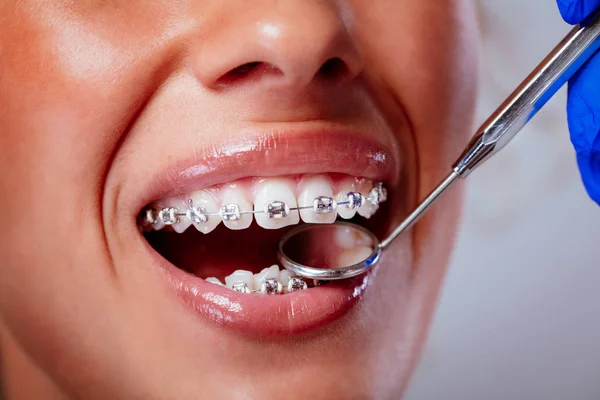
Traditional braces use brackets bonded to each tooth and a wire that is adjusted at regular visits. Because the appliance is fixed in place, treatment progresses without depending on how many hours a day the patient remembers to wear something.

That reliability is the main reason braces remain the preferred option for teenagers and for more complicated cases involving rotation, significant bite correction, or teeth that need to move in more than one direction. Adjustment appointments are short, and elastics are added when the upper and lower arches need to be brought into a better relationship. The case for metal braces for teens is explained further on the blog.

Discomfort is typically limited to the first few days after placement and after each adjustment, and it responds to soft foods and over-the-counter pain relief.

How Treatment Works at Alliance Dental Care

The first visit is an exam with digital imaging to evaluate tooth position, root angulation, and the health of the supporting bone and gums. Active decay or gum disease is treated first, because moving teeth through inflamed tissue risks losing attachment that will not grow back.

From there, the options that genuinely fit the case are presented with their timelines and their published fees. You leave knowing what treatment involves, how long it should take, and what it will cost.

Progress visits follow every few weeks for braces or at each tray change for aligners. After active treatment ends, a retainer holds the result, and wearing yours as directed matters because teeth naturally drift back toward their old positions during the first year.

Orthodontics and the Rest of the Smile

Alignment is often the first step in a broader plan. Once teeth are in position, patients sometimes finish with cosmetic tooth bonding to reshape a chipped edge or veneers to address shape and shade.

Restorative work is planned in the same sequence for a reason: a crown or bridge fabricated before teeth are aligned may not fit the corrected bite. Coordinating the order of treatment avoids paying twice for the same result.

What Orthodontics Costs in Meridian

Alliance Dental Care publishes orthodontic fees rather than quoting them privately. As listed on the pricing page, traditional braces and comprehensive clear aligner treatment are each $3,950, and limited clear aligner treatment is $2,500.

The practice was built to serve patients without dental insurance, so pricing is flat and paid at the time of service instead of routed through billing and claims. Membership details are explained on the new patient page.

How Alliance Dental Care Can Help

Orthodontic evaluations are performed by Dr. Roarke J. Miller, DMD, and Dr. Kevin Wagner, DMD, at Alliance Dental Care, 270 S. Ten Mile Rd., Suite 100, Meridian, ID 83642. The exam covers which option fits your case, how long treatment should take, and the full published fee before anything is scheduled.

To learn more about the treatments offered, visit the services page, read the blog for additional information on oral health, or use the contact page to request an appointment. The office answers calls Monday through Thursday, 8 AM to 5 PM, at (208) 608-2098.

Reviews

What Our Amazing Patients Have To Say

American Dental Association Logo
Zoom Whitening Logo
National Dental Association Logo
Invisalign Logo
Academy of General Dentistry Logo
Alliance team photo

Don’t Wait

Book Your Next Dental Appointment With Alliance Dental Care.

FAQ

Frequently Asked Questions

Do you need an orthodontist for braces or aligners?

No. General dentists with orthodontic training routinely provide braces and clear aligner treatment, and complex cases such as surgical corrections are referred to a specialist. At the exam, you are told plainly whether your case is a good fit for treatment at Alliance Dental Care.

How much do braces cost in Meridian, ID?

Traditional braces are listed at $3,950 at Alliance Dental Care. Comprehensive clear aligner treatment is the same price, and limited aligner treatment for smaller corrections is $2,500. Current figures are kept on the pricing page.

How long does orthodontic treatment take?

Most comprehensive cases run twelve to twenty-four months, while limited corrections can finish in six months or less. The estimate depends on how far the teeth must travel, which is why a timeline is only given after imaging.

Are clear aligners as effective as braces?

Yes. Tooth movement depends on healthy bone and gums rather than age, and adult treatment is common at the Meridian office. Adults frequently choose aligners for appearance at work, and treatment options for adults and teens are compared on the blog.

Will teeth shift after treatment?

Without a retainer, yes. Retention is part of the plan because the fibers around each tooth pull it toward its original position for months after the appliance comes off.

"